How to Support Your Fertility Naturally: An Acupuncturist's Guide
By Kat Starbird
If you've been trying to conceive for a while, or you're just starting to think about it, one of the most useful things you can do is learn how to work with your cycle instead of around it. Your menstrual cycle is not just a monthly inconvenience or a fertility tracking exercise. It's a map. An intimate for of communication from your body. Once you know how to read and understand each symptom, sensation and phase of your cycle- you can support your body in a way that builds vibrant reproductive health over time.
This is the approach we use at Starbird Women's Health with our fertility patients in Bend, Redmond, Sisters, and across Central Oregon. Natural fertility support isn't about doing everything perfectly. It's about understanding what your body needs at each stage and meeting it there. It’s about turning inward and listening to your mind, body and spirit needs within each different phase of your cycle.
Your Cycle Has Four Phases. Each One Matters.
Chinese medicine has understood cyclical hormonal patterns for thousands of years. What modern functional medicine now confirms is that estrogen, progesterone, LH, and FSH each rise and fall in a specific rhythm across your cycle, and each phase creates a different hormonal environment that calls for different support.
Here's how we think about it.
Phase 1: Menstruation (Days 1–5)
The Blood Phase // Inner Winter
This is the release phase. The uterine lining sheds, and in Chinese medicine terms, we want that process to be smooth and complete allowing for the free flow of qi and blood. Cramping, clotting, very heavy or very light flow, or periods that stop and start are all signs that something in this phase needs attention. So is a level of fatigue so pronounced you’ve normalized needing to be horizontal while bleeding.
What supports this phase: warmth, rest, and gentle movement. Cold foods and cold temperatures can constrict blood flow and make shedding harder. This is not the time to push through a hard workout or a stressful week if you can help it. Nourishing foods, a hot water bottle, and slowing down are genuinely useful here, not just nice ideas. We want you to get into your body at this time. Feel and breathe into the womb space.
From an acupuncture perspective, we use this phase to move stagnation, address pain, and support a clean, complete bleed. If your periods are painful or irregular, this is often where we start.
Phase 2: The Follicular Phase (Days 6–13)
Yin Phase // Inner Spring
After menstruation, estrogen begins to rise and a follicle starts developing in preparation for ovulation. This is a building phase. Like spring, energy comes back, buds begin to grow (follicles). The body is moving toward its peak.
What supports this phase: protein, iron-rich foods, and anything that builds blood and vital energy. In Chinese medicine, we think of this as a time to nourish the yin — the cooling, building, receptive substances that support follicle development and a healthy uterine lining. Yin is pure fluid, secretions. Leafy greens, legumes, seeds, broths and quality protein all belong here.
Acupuncture during this phase focuses on supporting follicle development, building a healthy lining, and making sure the hormonal rise is happening smoothly. If you've had thin lining issues or poor follicle response in IVF cycles, this phase is particularly important to support.
For women with metabolic issues, insulin resistance, PCOS, stubborn weight, estrogen dominance, etc- this is a time of your cycle we really want to focus on moving stagnation moving towards ovulation to support the healthy release of a follicle.
Phase 3: Ovulation (Around Day 14, but it varies)
Yin Yang Pivot Phase // Inner Summer
This is the most important window in your cycle if you're trying to conceive, and it's one of the most commonly mistimed. A lot of women are taught that ovulation always happens on Day 14. Many women ovulated in a healthy way as early as day 9 or 10 and as late as day 21. We will teach you exactly how to properly track.
What supports this phase: knowing when you actually ovulate. Basal body temperature charting, LH surge tracking, and paying attention to cervical mucus changes will tell you far more than a calendar will. At Starbird, we teach our fertility patients how to track accurately because the data is genuinely useful — for timing, for understanding your cycle, and for giving us information to work with clinically. We gain SO much insight about each phase when you bring in your BBT charts.
Acupuncture around ovulation supports the LH surge, helps trigger smooth follicle release, and addresses anything that might be disrupting ovulation — stress, elevated FSH, damp accumulation, stagnation of qi or blood, luteal phase issues that have their roots here.
Phase 4: The Luteal Phase (Days 15–28)
Yang Phase // liver and kidney energy dominant // Inner Autumn
After ovulation, progesterone rises to prepare the uterine lining for potential implantation. This phase is often overlooked in fertility conversations, but a short or insufficient luteal phase is one of the more common reasons conception doesn't happen or early losses occur.
Signs of luteal phase insufficiency include spotting before your period starts, a luteal phase shorter than 12 days, PMS symptoms that are significant, or a basal body temperature that drops too early. These are things we can work with directly.
What supports this phase: warmth again, stress management, and foods that support progesterone production. This is not the phase to over-exercise or under-eat. Your body is doing something important, and it needs resources to do it. If you are predominantly liver qi stagnant you’re going to feel like you need to over exercise here. Balance is keep. Movement is medicine but not if it’s causing deficiency over time.
Acupuncture in the luteal phase focuses on supporting progesterone levels, maintaining a warm and receptive uterine environment, supporting an healthy plump uterine lining, moving wi stagnation commonly labeled as PMS, and addressing the anxiety that so many women feel during the two-week wait. That anxiety is real, and it has a physiological effect. Keeping your nervous system regulated in this phase is not just emotional support — it's fertility support.
What This Looks Like in Practice
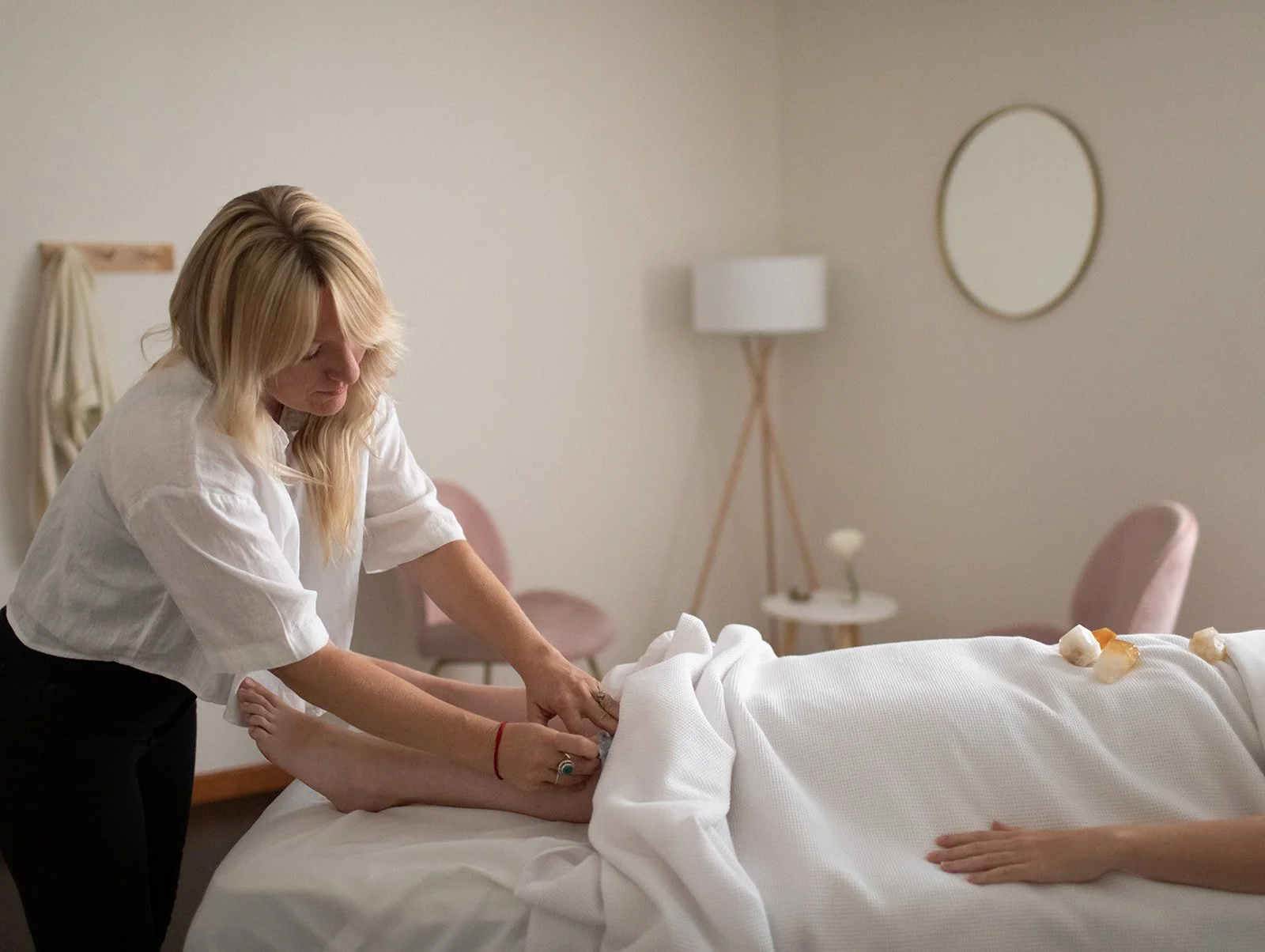
When a new fertility patient comes into Starbird, we don't just treat the phase they're in. We look at the whole cycle across multiple months to understand the pattern.
Where is the breakdown happening? Where is there deficiency? Where is there excess? What is the balance of warmth, cold, etc. is the imbalance more in follicle development, in the process of ovulation itself, in the luteal phase, or on the warming nourishing properties of progesterone (yang) creating a healthy uterine lining ready to receive implantation.
That picture reveals a pattern and guides your individual treatment.
We also collaborate with your OB, midwife, or reproductive endocrinologist when needed. Acupuncture and Chinese medicine work well alongside conventional care, and we're not asking you to choose.
If you're in Bend, Redmond, Sisters, or anywhere in Central Oregon and you want to understand your cycle better and build your fertility from the ground up, we'd love to work with you.
Learn more about our fertility and preconception care and our approach to women's health, or book a visit to get started.
Download the Free Fertility Blueprint
A root-cause guide to optimizing your cycle naturally using Chinese medicine and functional medicine principles.
References
Paulus WE, Zhang M, Strehler E, El-Danasouri I, Sterzik K. Influence of acupuncture on the pregnancy rate in patients who undergo assisted reproduction therapy. Fertility and Sterility. 2002;77(4):721–724. doi:10.1016/s0015-0282(01)03273-3
Smith C, Coyle M, Norman RJ. Influence of acupuncture stimulation on pregnancy rates for women undergoing embryo transfer. Fertility and Sterility. 2006;85(5):1352–1358. doi:10.1016/j.fertnstert.2005.12.015
